
Disclaimer: Newsletter and the information contained herein is not intended to be a source of advice or credit analysis with respect to the material presented, and the information and/or documents contained in this website do not constitute investment advice. Opinions contained within this letter are my own and not those of my employer.
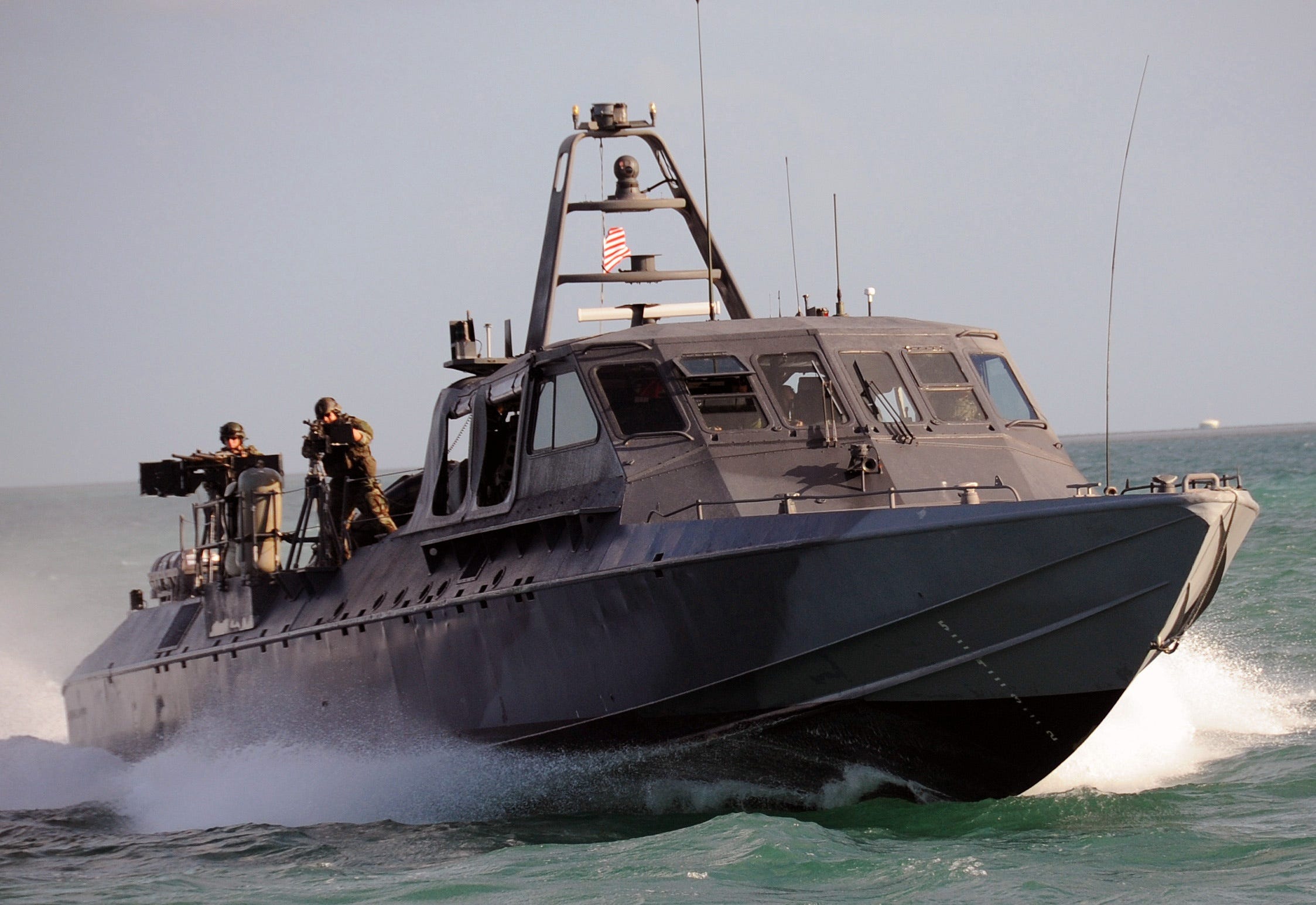
Palmer Luckey is an iconoclast. He collects strange vehicles, like a retired Mark V Special Operations Craft from the military. He also owns a UH-60 Black Hawk helicopter, a couple of submarines (non-military), and an ex-Marine Corps Humvee. On top of the strange vehicles, the guy also bought a decommissioned US Air Force nuclear missile silo. The purpose for that piece of real estate? To store the world’s largest video game collection in the world. He also built an Oculus headset in 2022 that was rigged with explosives set to detonate when you die in the game you are playing.
That’s mad scientist stuff.
On top of his weird collections, the man also spitballs a lot of business ideas. He has stated that he wanted to create a nonprofit prison system with incentives tied to reducing recidivism, ways to manufacture edible food from waste streams, neural interfaces to communicate with your computer more effectively, and much more.
Of course, he made a name for himself building the first (and really only) mainstream VR headset, then selling Oculus to Facebook / Meta for a princely sum of $2 billion. Mind you, this was a company he started as a teenager.
Then, for his next act, he built Anduril, which I wrote a bit about in my piece on drones in Ohio. The company is worth tens, if not hundreds, of billions of dollars and is likely the most meaningful defense contractor in the business today – not necessarily from a pure revenue perspective, but because of the way they have challenged the status quo for the entire defense contracting industry and military industrial complex. To use a massively oversimplified metaphor, they are Tesla in 2012 (or maybe 2017) taking on the traditional automakers. The rest of the auto industry is either trying to play catch up or they have effectively given up on that piece of the pie.
[For what it’s worth, I think there is a pretty decent chance that Anduril has a far more disruptive impact on their end-industry than Tesla, but that’s purely based on gut feel.]
But, again, Palmer Luckey is a self-proclaimed mad scientist, so building the most meaningful defense contractor (and maybe company full-stop) of its era is not enough. For his next move, he is going to do something really crazy: Open a Bank.
Wait, what?
Banks are one of the stodgiest, most boring businesses going and the man who drives a Humvee around and has a Nuclear Missile Silo and put bombs inside of a VR headsets so that if you die in the game you die in real life is going to build one?
Maybe there is more to the story? He is building this bank on Mars? Inside the center of the Sun? Or it’s stationed on an aircraft carrier in order to only be subject to maritime laws?
No, he’s building this bank in Columbus, Ohio.
The bank in question is Erebor. For those of you not as well versed in Lord of the Rings lore, Erebor is the mountain under which the dwarves kept their vast fortune and they fought with Smaug and the Five Armies over in The Hobbit. It’s an interesting tale of greed and what it does to our ability to lead honorable and just lives. Also, it’s an interesting name to build a bank around. But it does project strength, which I think is the point. And it flies in the face of the names of a lot of the neobanks that have been built in the past 10-15 years. (SoFi is dumb name.)
So two questions arise:
Why is he building a bank in the first place?
And why is he doing it in Ohio?
For the first question, Palmer has done a fair amount of publicity (see below). The punchline is that he really liked a lot of the practices of SVB – treating entrepreneurs fairly, being digital first, understanding how venture capital works, etc. – but didn’t like any of the downsides – being terrible at capital and treasury management. Remember, it wasn’t their lending practices that tore down SVB, but their cash flow and balance sheet management practices. The loans were solid, their bet on the venture industry was a good one, but they took unnecessary risk on the backend.
Luckey’s core belief is to build a digital first (and crypto-first) bank that doesn’t take on unnecessary risks. The whole point of a bank is to be a secure place to keep your money, not a way to generate returns based on risk. In history, whenever banks steer into that capital risk line of thinking, it tends to end poorly. In order to be good as a business, banks need to be stable. That is why they used to build the staunchest, most stable buildings, which big, wide columns and framed out of concrete and granite and marble, not the glass facade you would associate with most newer bank buildings today.
And while some view Erebor as a crypto-bank, Palmer is pretty adamant that the reason he is building on top of stablecoin rails from the outset is because every bank will have to get there eventually. His bet is not that crypto-first banks will beat legacy banks (although I would bet he does feel that way), his bet is that the actual management of the bank needs to be boring and stablecoins are part of that boring narrative, even if that isn’t super obvious.
Which is somewhat true when you look at the broader banking ecosystem history. JP Morgan, the fortress, has a reputation for being one of the more conservative banks. While that has sometimes slowed them down during boom times, it always helps them be more prepared for the eventual downturns that hit the economy.
Again, this is not a super novel concept. Applying it to a new market isn’t even that radical of a concept. Silicon Valley Bank was pretty boring bank in the day, right up until it wasn’t. There bet was be a boring bank for a boring industry: venture capital. They were mostly right. Venture, like most finance structures, is pretty boring. It’s the portfolio companies of VCs that aren’t boring, but that’s rarely who SVB was underwriting, especially in the early days. They were backing the VC firm first, then the startup.
Erebor believes in a similar company. Find industries that are currently viewed as risky, but are backed by stodgier institutions (more on that below). Maybe technology startups are still underserved in this market. But what about defense technology companies, more specifically? Or industrial automation startups? Deep Tech? Hard Tech? Etc.
Oh and by the way, the industry has generated a lot of debt as of late.
I could probably go on a lot longer about the Erebor thesis. But I am not really here to talk about the thesis behind Erebor. Palmer and crew have a belief that there needs to be a new kind of bank. That thesis could prove to be wildly successful, but who knows. What interests me is that they are doing this explicitly in Ohio.
So why Ohio?
First, Ohio is just a good state to do business in broadly. This is probably table stakes for any place that they were likely considering. Ohio has great infrastructure, a diverse economy, low cost of doing business, and growing industries that are strategically important (more on that in a second). A lot of Erebor’s early employees (see here) are in New York and California today, but there is a high likelihood they will have team in Columbus and this is a great place to hire people, let alone banking talent.
And to top that all off, Ohio is just generally a stable place. The economy is diverse and sturdy and the state just generally is perceived as a steady place to live and work. Sometimes, that works against Ohio, giving off the vibe that it is a boring place. This is a common, recurring meme. But for what Palmer is trying to build, boring is a good thing.
Beyond Ohio, it is curious that Joe Lonsdale and 8VC are also involved, and they have generally made big efforts to move a ton of startup activity to Texas, which also generally ranks very highly in business favorability rankings. So why pick Ohio over Texas in this instance? I am guessing that is was a tight competition among them. But Texas cost of doing business isn’t as strong as Ohio’s and their ability to actually penetrate the manufacturing and defense industries likely has some pretty big question marks around it.
Sure the Erebor backers could have picked New York and California, where a lot of the early talent will be located, but I am guessing that the incentives to build companies in those states are just not palatable for these backers, even if that’s where a lot of the talent is. Plane tickets and relocation packages cost a lot less than paying exorbitant taxes and running the risk of being a target for political harassment by officials who are anti-big tech.
Second – Ohio just generally has good banking culture. Cleveland has a strong investment banking history, Cincinnati has strong commercial / middle market banking know-how, and Columbus has strong backoffice and retail banking skills.
In Columbus, there is JP Morgan Chase’s central Ohio office with 18,000 – 20,000 full time employees, mostly focused on operational / back office roles. Only about 5-10% of those folks are in the commercial banking, wealth management, or sales side of the business. Today, the major functions hosted out of Columbus for one of the most stalwart banks in the country include: Card Services, Consumer Banking Technology, Payments, Fraud Detection, Cybersecurity, Cloud Engineering, Mortgage Operations, Deposit Operations, Risk Management, AML / Compliance, Finance, and Internal Audit.
Erebor is going to need to build most of those functions.
That is important because those are exactly the types of folks that Erebor wants to recruit. Sure, New York has the best investment bankers in the world, but I doubt Erebor wants to hire any of those folks any time soon anyway. If you are a back-office employee in New York, you are looked down upon. That is not the case in Ohio.
And it’s not just Chase in Ohio either. There is also Fifth Third Bank (~#14 in the nation by AUM), Huntington (~#16), Key Bank (~#20), First Financial (~#100), and many others. Ohio is home to roughly $600 billion in banking assets if you don’t include JP Morgan Chase. It punches well above it’s weight from a banking talent perspective.
Third – And likely the most compelling reason, is that Ohio is where Anduril is building Arsenel-1, their new drone manufacturing facility outside of Columbus. Anduril was deeply impacted by the SVB crisis and Palmer Luckey has talked about how that impact is why they wanted to start a boring bank like Erebor. Anduril is certainly going to be one of their first customers.
But it’s not just about Anduril being a customer, but what Anduril represents. The current popular viewpoint of where the technology sector is moving in the future. 8VC (Joe Lonsdale), Founders Fund (Trae Stephens and Peter Thiel), and many others involved with Erebor believe that defense tech and industrial automation are the next wave to ride (outside of AI). Anduril is just one of the first big players in this space to really break out. But there will be many more. And a big reason that Anduril selected Ohio for Arsenal-1 is also a big reason that Erebor would pick Ohio – this is where a lot of these next wave defense tech and industrial automation / manufacturing companies and talent already exist.
If manufacturing is where tech is moving over the next 20 years, then the bet is that Ohio will be at the center of that because Ohio already has a strong base in those sectors. And if you are building the bank for the future of tech, you better be close to where that future is going to occur. Erebor being located in Ohio is a huge bet that Ohio is going to be a major player and beneficiary of the next wave of technological innovation.
And this is not a decision made lightly. Since the 2008/2009 financial crisis, fewer than 100 new full-service OCC-chartered banks have been formed. Not per year, but cumulatively. And that (~100) used to be the amount created per year pre-recession. Erebor is the first OCC Charter granted under the second Trump Administration
It is extremely hard and expensive to start a bank. The regulations are very burdensome and the fees required are tricky. So to make a decision like this, one wouldn’t make it likely.
Now, do I think that this means Erebor is going to hire tens of thousands of employees in Columbus over the next 5 years and become the largest bank by employee count in the state? Not really. It’s a federally chartered bank and a lot of it’s employees will still be on the coasts, especially as things get off the ground. As previously stated, most of them are in New York today. The bet is that they will need to hire these folks eventually. But, the fact that the bet is being made at all tells you that someone did the risk calculation and decided that it was worth taking.
What other risks are worth taking in Ohio?
Midwest Deal Roundup
This is a section on some of the most interesting deals (not just venture) done in the Midwest in the last ~week.
⚡ Forgent Power Solutions raises $2.14B in follow-on offering
📍 Maple Grove, Minnesota
What they do: Forgent Power Solutions manufactures electrical distribution equipment used in data centers, utilities, and industrial facilities. Its products—including switchgear, transformers, power distribution units, and electrical houses—sit at the heart of the infrastructure powering AI data centers and grid modernization.
The deal: The company completed a $2.14 billion secondary public offering, selling 43.7 million Class A shares at $49 per share. Roughly $713 million of proceeds went to the company, while existing shareholders sold approximately $1.42 billion worth of stock.
⚾ Rawlings Sporting Goods reportedly exploring a $2B sale
📍 St. Louis, Missouri
What they do: Rawlings is one of the most recognizable brands in sporting goods, manufacturing baseball gloves, bats, protective equipment, and other sports gear.
The deal: According to PitchBook, the company is reportedly in acquisition talks at an estimated valuation of $2 billion.
🏗️ MasTec acquires The Superior Group for $1.65B
📍 Columbus, Ohio
What they do: Superior Group provides electrical construction, engineering, modular manufacturing, structured cabling, and integrated building systems for commercial and industrial customers.
The deal: MasTec (NYSE: MTZ) reached a definitive agreement to acquire the company for approximately $1.65 billion.
❤️ Esperion Therapeutics taken private in $1.45B buyout
📍 Ann Arbor, Michigan
What they do: Esperion develops cholesterol-lowering cardiovascular therapies, including FDA-approved non-statin treatments for patients with elevated LDL cholesterol.
The deal: Healthcare-focused private equity firm ARCHIMED agreed to acquire the public company in a $1.45 billion public-to-private transaction, backed by $500 million of debt financing and including a potential $100 million contingent payment.
🔐 Keyfactor lands $1B growth investment
📍 Independence, Ohio
What they do: Keyfactor provides cybersecurity software focused on digital identity, PKI (public key infrastructure), and machine identity management—critical infrastructure for securing cloud environments and connected devices.
The deal: The company raised approximately $1 billion in growth capital led by Summit Partners.
🚛 Jack Doheny Companies acquired in $175M leveraged buyout
📍 Northville, Michigan
What they do: Jack Doheny supplies sewer cleaning equipment, industrial cleaning systems, and rental equipment serving municipalities and utility contractors across North America.
The deal: The company was acquired in a $175 million leveraged buyout.
🧬 Allotera Therapeutics raises $150M Series C
📍 St. Louis, Missouri
What they do: Allotera is developing an AI-enabled drug discovery platform focused on identifying allosteric therapeutic targets for difficult diseases.
The deal: The company raised $150 million in a combined Series C / C-1 financing led by Fidelity Management & Research, with participation from Abingworth, Aisling Capital, RiverVest, BioGenerator Ventures, LYZZ Capital, Tybourne Capital Management, and others.
🧲 ReElement Technologies receives $25M federal grant
📍 Fishers, Indiana
What they do: ReElement develops rare earth element separation and purification technology used in permanent magnets and EV battery supply chains.
The deal: The company received a $25 million federal grant.
💳 Cincinnati fintech Payload raises $9.1M
📍 Cincinnati, Ohio
What they do: Payload builds payment infrastructure software that automates invoicing, collections, payouts, subscriptions, and embedded payment workflows.
The deal: The company closed a $9.08 million venture financing, including the conversion of approximately $4.1 million previously raised through SAFE notes.
🌱 Imio raises $6M
📍 Chicago, Illinois
What they do: Imio develops agricultural microbial products that improve crop yields by naturally enhancing soil health and nutrient cycling.
The deal: The company raised $6 million led by Starshot Capital.
⛳ NewClub raises $2.6M seed round
📍 Chicago, Illinois
What they do: NewClub is building software for golf clubs that combines membership management, tee time booking, travel planning, events, and community features into a single platform.
The deal: The company raised $2.59 million in seed financing.
By the numbers
-
11 notable Midwest transactions
-
~$9.6B in announced transaction value
-
States represented: Ohio, Illinois, Indiana, Michigan, Minnesota, and Missouri